
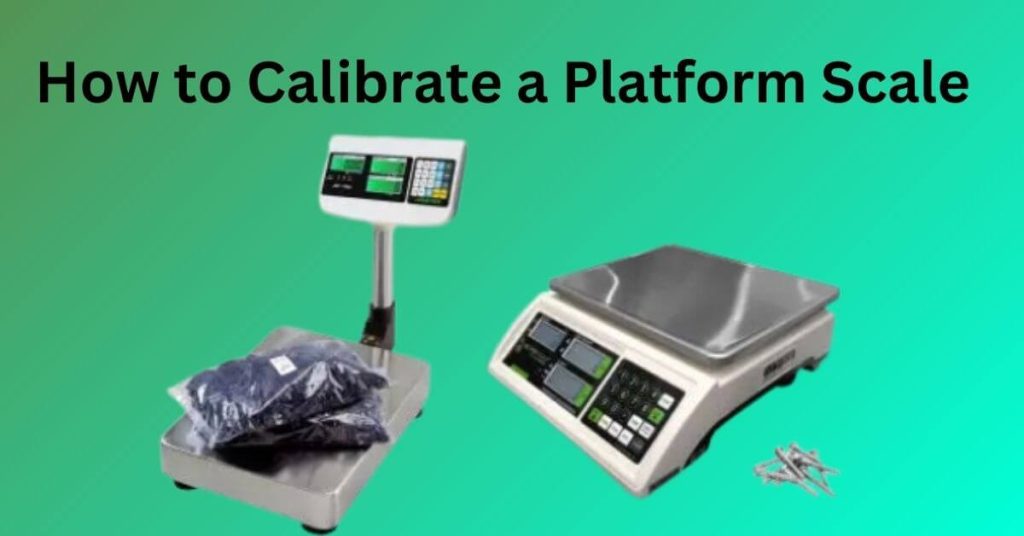
Proper calibration is essential to ensure accuracy when using a platform scale, especially for industrial applications. Here’s a step-by-step guide on how to calibrate a platform scale effectively.
Why Calibrate a Platform Scale?
Calibration ensures your platform scale provides accurate weight readings, which is crucial in industries where precision affects profitability and compliance. Regular calibration can:
- Enhance Accuracy: Ensures readings reflect true weight.
- Prevent Over/Under Measurements: Protects against costly inaccuracies.
- Ensure Compliance: Many industries require accurate weighing for legal reasons.
Let’s look at how to calibrate your platform scale properly.
Tools You’ll Need for Calibration
Before you begin, gather these essential tools:
- Calibration Weights: Typically certified weights are used.
- Owner’s Manual: Specific instructions for your model.
- Cleaning Supplies: Dust and debris affect scale performance.
Note: Only use certified calibration weights, as uncertified weights may compromise accuracy.
Step-by-Step Guide to Calibrating a Platform Scale
1. Prepare the Scale for Calibration
Proper preparation is crucial:
- Turn Off the Scale: Ensure it’s powered off.
- Remove Any Load: Remove all items and clear the platform.
- Clean the Platform: Dust and debris can impact calibration.
“Even minor particles can impact readings. Cleanliness is critical!”
2. Warm-Up Period
Turn the scale back on and allow it to warm up, usually about 15 minutes. This stabilizes the load cells and electronics for accurate calibration.
3. Zero the Scale
After warming up:
- Press the Zero Button: This resets the scale to a baseline.
- Verify Zero Reading: Ensure the display shows zero.
Tip: Double-check the zero reading before moving on.
4. Place the Calibration Weight
Now it’s time to use your calibration weights:
- Add Calibration Weight: Place the certified weight on the platform.
- Record the Reading: The displayed weight should match the calibration weight.
- Adjust as Needed: If the scale shows a discrepancy, refer to your manual for fine adjustments.
Important: Always use weights that match the scale’s maximum capacity to avoid overloading.
5. Enter Calibration Mode
Most platform scales have a specific mode for calibration, typically accessible by pressing a combination of buttons. Refer to your manual to enter this mode.
Fine-Tuning Adjustments
Sometimes, further fine-tuning is needed. Many scales have adjustment features:
- Access the Calibration Menu: Once in calibration mode, use the menu to make micro-adjustments.
- Verify Each Change: Check the display after each adjustment.
- Save Settings: Once adjustments are accurate, save settings before exiting.
Regular Maintenance Tips for Long-Term Accuracy
Regular calibration is just one part of scale maintenance. Here are additional tips to ensure long-term accuracy:
- Calibrate Regularly: Frequency depends on usage; however, annual calibration is recommended for most industrial applications.
- Keep It Clean: Dust and other particles affect accuracy.
- Avoid Overloading: Always use within capacity.
- Use on a Stable Surface: Movement can cause inaccurate readings.
When to Recalibrate
Recalibration is needed after:
- Heavy Use: For high-use scales, recalibrate every few months.
- Relocation: Moving the scale can impact accuracy.
- Sudden Environmental Changes: Temperature and humidity shifts affect readings.
Choosing the Right Calibration Weights
The right weights are essential for accurate calibration. Here’s how to choose them:
- Match the Scale’s Capacity: Avoid using weights below the platform’s capacity.
- Use Certified Weights: Only certified weights offer the necessary accuracy.
- Store Properly: Keep weights in a clean, dry area to maintain precision.
Advanced Calibration Features in Modern Platform Scales
Today’s scales often come with features that simplify calibration. Here are some of the most common:
- Automatic Calibration Mode: Some scales offer automated options, saving time.
- Digital Fine-Tuning: Allows for micro-adjustments on the display.
- Internal Calibration Weights: Some models have built-in weights for instant calibration.
“Check if your scale has an advanced feature set—these can simplify the process significantly.”
Where to Buy Reliable Platform Scales in South Africa
When choosing a platform scale, it’s important to select a model that supports easy calibration and suits your industry’s specific requirements. Industrial Scales South Africa offers a wide range of platform scales for various industrial applications, each equipped with top-quality features for precise calibration and compliance.
Why Choose Industrial Scales South Africa?
- Certified Equipment: All scales meet local and international standards.
- Expert Support: We offer guidance on calibration and maintenance.
- Extensive Selection: Our inventory includes scales for every industry, from small businesses to large-scale operations.
Final Thoughts on Calibrating Platform Scales
Regular calibration is critical to maintaining the accuracy and compliance of your platform scale. Whether you’re handling bulk materials, conducting laboratory research, or managing inventory, proper calibration practices keep your operations running smoothly and efficiently.
“Precision is key in industrial applications—calibration is your guarantee of accuracy.”
To explore platform scales that support seamless calibration and are suited for South African industries, visit our website at Industrial Scales South Africa.
FAQs: How to Calibrate a Platform Scale
1. Why is calibrating a platform scale important?
Calibrating a platform scale ensures accurate weight measurements. Regular calibration is crucial for compliance, especially in industries that rely on precision, such as manufacturing and logistics.
2. How often should a platform scale be calibrated?
Frequency depends on how frequently the scale is used, environmental factors, and industry standards. Generally, heavy-use scales should be calibrated monthly or quarterly, while others may only require annual calibration.
3. What tools are required for calibrating a platform scale?
Calibration requires certified calibration weights, ideally within the scale’s maximum capacity. Some scales may also need special tools or software for adjustment.
4. Can I calibrate a platform scale myself?
Yes, some scales can be calibrated manually. However, for scales used in professional settings, it is recommended to hire a licensed technician to ensure accuracy and compliance with local standards.
5. What are the steps for calibrating a platform scale?
Calibration usually involves setting the scale to zero, adding certified weights in increments, and adjusting any discrepancies. Follow the scale’s manual, as each model can vary.
6. What is the difference between calibration and verification?
Calibration adjusts the scale to ensure accuracy, while verification confirms that the scale meets required standards without making adjustments. Verification often occurs after calibration.
7. How do environmental conditions affect scale calibration?
Factors like humidity, temperature changes, and vibrations can impact scale accuracy. Calibrating in the scale’s regular environment helps ensure consistent results.
8. How can I tell if a scale is out of calibration?
Signs include inconsistent readings, drift over time, or weights that do not align with certified values. Regular verification can help identify these issues early.
9. Are there specific calibration requirements in South Africa?
Yes, South African laws require specific scales used in trade to comply with standards set by the National Regulator for Compulsory Specifications (NRCS). Verification and certified calibration weights are often necessary.
10. What happens if I don’t calibrate my scale?
Failure to calibrate can lead to inaccurate measurements, affecting product quality and potentially resulting in non-compliance fines in regulated industries.
Related Articles:
Contact Us Today!
For more information or to get in touch with us at Industrial Scales South Africa, you can contact us through the following:
- Website: industrialscalessouthafrica.co.za
- Email: info@industrialscalessouthafrica.co.za
- Phone: 011 048 2402
- Address: 77 5th Street, Wynberg, Sandton, 2090, Johannesburg
Feel free to reach out for expert advice or to inquire about our products and services. We’re here to help with all your industrial scale needs!