
Types of Industrial Scales

Industrial scales come in various types, each designed for specific applications across different industries such as manufacturing, logistics, agriculture, and retail. Here are the common types of industrial scales, their features, and their typical uses:

1. Bench Scales

  • Description: Compact and highly versatile, bench scales are designed to sit on a workbench or table. In addition, they are used for weighing smaller items with high precision.
  • Capacity: Typically ranges from a few grams to about 300 kg.
  • Applications: Common in packaging, food production, laboratories, and retail for weighing small items.

2. Platform Scales

  • Description: These scales feature a large flat surface, ideal for weighing heavy, bulky, or large items. They often come with an attached digital display.
  • Capacity: Can range from 500 kg to several tons.
  • Applications: Frequently used in warehouses, manufacturing plants, and shipping facilities for heavy-duty weighing.

3. Floor Scales

  • Description: Designed to be placed on the floor, these scales are built for heavy, high-capacity items. They often include ramps for easy loading of goods.
  • Capacity: Commonly 1,000 kg to 20,000 kg.
  • Applications: Used in industrial settings, such as logistics and transportation, for weighing large quantities of raw materials or finished products.

4. Crane Scales

  • Description: Suspended scales that are used for weighing objects that are lifted by a crane. Moreover, they feature a hook to lift heavy objects in order to ensure** accurate weight measurement.
  • Capacity: Can range from 1,000 kg to 100 tons or more.
  • Applications: Ideal for industries like steel production, construction, and shipping, where items are hoisted for weighing.

5. Pallet Scales

  • Description: Specifically designed for weighing pallets. They are often built into pallet jacks, allowing goods on pallets to be moved and weighed simultaneously.
  • Capacity: Typically supports weights up to 2,000 to 3,000 kg.
  • Applications: Common in warehouses, shipping, and receiving departments, where palletized goods need to be weighed during transportation or storage.

6. Counting Scales

  • Description: These scales not only weigh items but also count them based on the weight of a sample item. Furthermore, they are commonly used for small parts, such as screws or components.
  • Capacity: Ranges from a few grams to 100 kg.
  • Applications: Useful in manufacturing, inventory management, and retail environments where counting high volumes of small items is essential.

7. Precision Scales (Analytical Scales)

  • Description: Precision or analytical scales are extremely accurate, designed for high-precision weighing in laboratory settings.
  • Capacity: Typically up to 10 kg, but with high accuracy down to milligrams.
  • Applications: Used in scientific laboratories, pharmaceutical production, and any industry where minute measurements are critical.

8. Weighbridges (Truck Scales)

  • Description: Large, heavy-duty scales designed for weighing entire trucks and their cargo. Typically, businesses install them in fixed locations, such as weigh stations or logistics facilities.
  • Capacity: Can handle weights of up to 100 tons or more.
  • Applications: Used in the transport, logistics, and agricultural industries to measure the gross weight of trucks and vehicles for compliance and cost calculations.

9. Hanging Scales

  • Description: Similar to crane scales but for smaller objects, hanging scales use a hook or platform to suspend the item for weighing.
  • Capacity: Typically ranges from 50 kg to 500 kg.
  • Applications: Commonly used in markets, warehouses, and in agriculture to weigh items such as sacks of grain or produce.

10. Portable Scales

  • Description: Lightweight and designed for easy transportation, portable scales can be used in the field or moved between locations.
  • Capacity: Depends on the type, ranging from 100 kg to 1,000 kg.
  • Applications: Used in mobile setups, such as fieldwork in agriculture or on-site construction weighing.

11. Medical and Veterinary Scales

  • Description: Designed for medical or veterinary use, these scales are tailored to accurately weigh patients or animals.
  • Capacity: Typically ranges from 100 kg to 500 kg.
  • Applications: Found in hospitals, clinics, and veterinary practices for weighing patients, livestock, or animals.

Key Features to Consider When Choosing an Industrial Scale:

  • Capacity: The maximum weight the scale can measure.
  • Accuracy: The level of precision required for your weighing tasks.
  • Durability: Industrial scales need to withstand harsh conditions, such as moisture, dust, or rough handling.
  • Portability: If you need to move the scale between different locations.
  • Connectivity: Many modern industrial scales provide data connectivity options, such as USB, Bluetooth, or Wi-Fi, enabling direct data transfer to computers or inventory systems.

By selecting the right type of industrial scale based on your industry’s requirements, you can enhance efficiency, accuracy, and productivity in your operations.

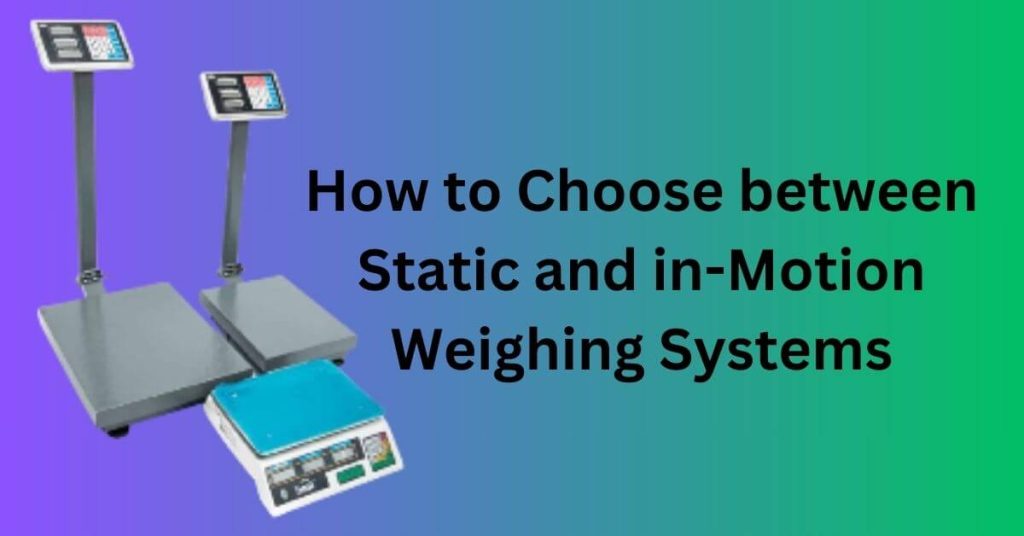
How to Choose between Static and in-Motion Weighing Systems

How to Choose between Static and in-Motion Weighing Systems

When selecting a weighing system for your business, one critical decision is whether to choose a static weighing system or an in-motion weighing system. These systems serve different operational needs, and understanding their advantages, limitations, and applications is essential for making an informed choice. In this article, we’ll dive deep into each system, comparing their […]

How to Choose between Static and in-Motion Weighing Systems Read More »
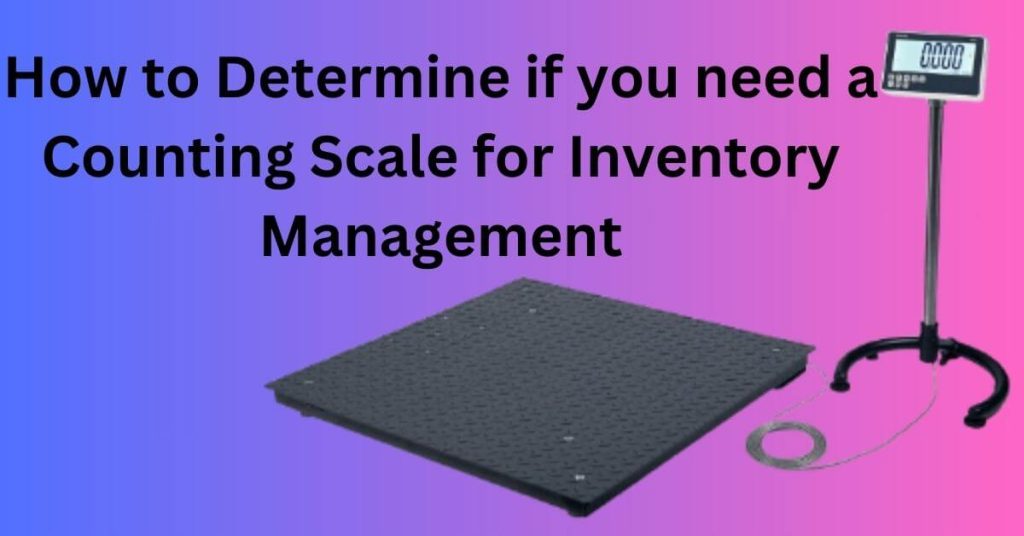
How to Determine if you need a Counting Scale for Inventory Management

How to Determine if you need a Counting Scale for Inventory Management

In the world of inventory management, accuracy and efficiency are paramount. For many businesses, especially those dealing with small, identical items, a counting scale can be a game-changer. This article explores how to determine if investing in a counting scale is right for your inventory management needs. Key Factors to Consider When evaluating whether a

How to Determine if you need a Counting Scale for Inventory Management Read More »

How to Select Scales for Food Processing Industries in South Africa

How to Select Scales for Food Processing Industries in South Africa

Selecting the right scales for food processing industries in South Africa is vital for ensuring accuracy, compliance, and operational efficiency. The food industry is unique, requiring precision and reliability in weighing to maintain product quality and adhere to regulatory standards. This guide provides a structured approach to help you make an informed decision when choosing

How to Select Scales for Food Processing Industries in South Africa Read More »

How to Choose Scales for Hazardous Environments in South African Industries

How to Choose Scales for Hazardous Environments in South African Industries

Choosing the right scales for hazardous environments in South African industries is a critical decision that can impact safety, compliance, and operational efficiency. This guide outlines essential considerations to help you make an informed choice when selecting scales for these challenging conditions. Lets delve in to How to Choose Scales for Hazardous Environments in South

How to Choose Scales for Hazardous Environments in South African Industries Read More »

How to Pick the Appropriate Capacity for your Industrial Scale

How to Pick the Appropriate Capacity for your Industrial Scale

Selecting the right capacity for your industrial scale is a crucial decision that can significantly impact your operational efficiency and accuracy. In the dynamic industrial landscape of South Africa, making an informed choice requires understanding your specific needs and the various factors that influence scale performance. This guide will help you navigate the complexities of

How to Pick the Appropriate Capacity for your Industrial Scale Read More »

How to Decide between Digital and Analog Industrial Scales

How to Decide between Digital and Analog Industrial Scales

When it comes to industrial weighing equipment, choosing between digital and analog scales can significantly impact your operational efficiency. Each type of scale offers unique advantages and limitations, and the decision should be based on your specific business needs. This guide will explore the key factors to consider when deciding which type of industrial scale

How to Decide between Digital and Analog Industrial Scales Read More »

How to determine if you need a crane scale for your South African industry

How to Determine if you need a Crane Scale for your South African Industry

Selecting the right weighing equipment is crucial for efficient operations in many industrial sectors across South Africa. Among the various options, crane scales offer unique advantages for industries dealing with heavy and irregularly shaped loads. But How to Determine if you need a Crane Scale for your South African Industry? In this article, we’ll guide

How to Determine if you need a Crane Scale for your South African Industry Read More »

How to Select the Best Bench Scale for Small Industrial Applications

How to Select the Best Bench Scale for Small Industrial Applications

Selecting the right bench scale for small industrial applications is essential for ensuring accuracy and efficiency in your operations. With various options available in the market, making an informed choice requires careful consideration of several key factors. This article outlines a structured approach to help you identify the best bench scale tailored to your specific

How to Select the Best Bench Scale for Small Industrial Applications Read More »

How to Compare Platform Scales vs. Floor Scales for Industrial Use

How to Compare Platform Scales vs. Floor Scales for Industrial Use

In the world of industrial weighing, selecting the right scale is crucial for maintaining efficiency and accuracy. Specifically, two common types of scales are platform scales and floor scales. Although the terms are often used interchangeably, they possess distinct characteristics that can significantly influence their suitability for specific tasks. Therefore, in this article, we will

How to Compare Platform Scales vs. Floor Scales for Industrial Use Read More »

How to choose the right industrial scale for your business in South Africa

How to Choose the Right Industrial Scale for your Business in South Africa

Choosing the right industrial scale for your business in South Africa is critical for ensuring smooth operations and accurate measurements. With so many options available, making the right choice can seem overwhelming. However, by understanding your specific needs and considering key factors like capacity, accuracy, and environmental conditions, you can select the ideal scale to

How to Choose the Right Industrial Scale for your Business in South Africa Read More »