
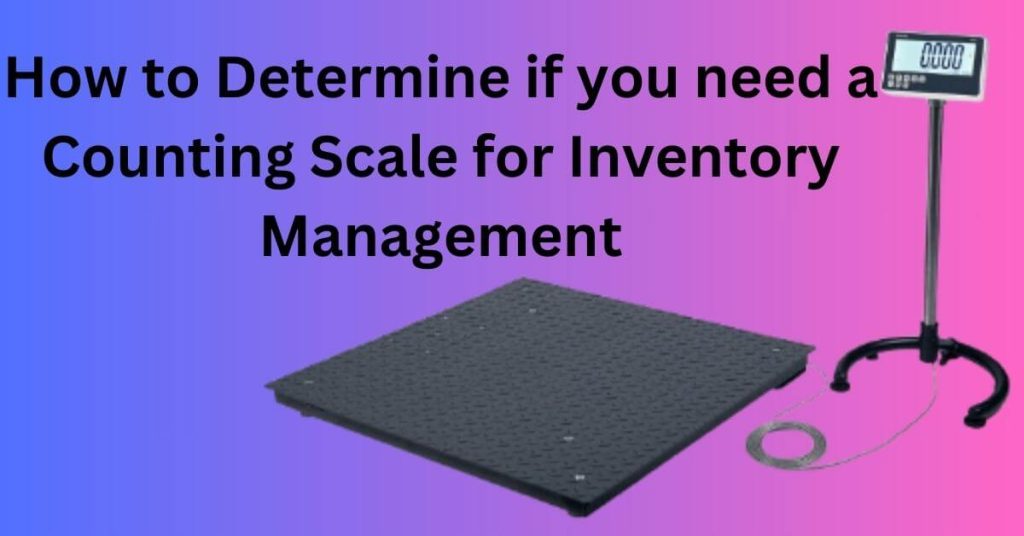
In the world of inventory management, accuracy and efficiency are paramount. For many businesses, especially those dealing with small, identical items, a counting scale can be a game-changer. This article explores how to determine if investing in a counting scale is right for your inventory management needs.
Key Factors to Consider
When evaluating whether a counting scale is necessary for your operations, consider the following key factors:
1. Nature of Your Inventory
Type of Items
If your inventory consists of small, identical items—such as screws, nuts, or small electronic components—a counting scale can significantly streamline the counting process.
“Counting by hand for small items can be impractical and prone to errors.”
For businesses that handle a large number of the same item, manually counting can be both time-consuming and error-prone. In contrast, counting scales can accurately count hundreds or thousands of items quickly, saving valuable time and reducing the likelihood of mistakes.
Volume of Inventory
High volumes of inventory requiring frequent counting can benefit immensely from the efficiency of a counting scale. If your business regularly deals with large quantities, investing in a counting scale can save time and reduce labor costs. For instance, a small electronic parts distributor could easily automate the counting of thousands of components, enhancing both speed and accuracy.
2. Accuracy Requirements
Precision Needs
In operations where accuracy is paramount, it’s crucial to select a scale with high resolution—ideally at least 1:10,000. This ensures that even small weight variations do not lead to significant counting errors.
- For example: If you’re managing an inventory of precision components, the accuracy of each count is vital. An inaccurate count can lead to production delays or customer dissatisfaction.
Sample Size Considerations
The accuracy of a counting scale often depends on the sample size used for weighing. A larger sample size typically yields more accurate results, so consider how easily you can weigh samples for your inventory.
- Tip: When determining your counting method, ensure that you can consistently weigh representative sample sizes to ensure optimal counting accuracy.
3. Operational Efficiency
Time Savings
Counting scales allow for quick counts of multiple items simultaneously, which can significantly enhance operational efficiency compared to manual counting.
- For instance: A warehouse worker can count thousands of items in minutes rather than hours, enabling faster inventory turnover.
Labor Reduction
By automating the counting process, you can reduce the need for manual labor, thus lowering operational costs and minimizing human error. This not only streamlines operations but also allows employees to focus on more critical tasks rather than monotonous counting.
4. Features and Functionality
Weight Capacity and Graduation
Ensure the scale’s weight capacity aligns with your inventory needs and that it offers appropriate graduation sizes for the items you are weighing.
- Example: If you deal with larger items, ensure that the counting scale can accommodate those weights and offers precision for smaller increments.
Connectivity Options
If you require data integration for inventory management systems, look for scales with connectivity features (USB, Ethernet) that allow for easy data transfer and monitoring. This can enhance the overall efficiency of your inventory management process by seamlessly integrating counts into your systems.
5. Budget Considerations
Cost vs. Benefit Analysis
Evaluate the cost of purchasing or renting a counting scale against the potential savings in time and labor. A well-chosen counting scale can be a valuable investment that pays off through improved efficiency and accuracy over time.
- Considerations: Think about the time saved by automating counts, reduced errors leading to less waste, and the overall improvement in inventory accuracy.
How to Determine if you need a Counting Scale for Inventory Management: Conclusion
In summary, if your business involves managing small parts in significant quantities and requires high accuracy while aiming to improve efficiency, a counting scale is likely a worthwhile investment. By carefully evaluating your inventory needs, accuracy requirements, operational efficiency, and budget considerations, you can make an informed decision that enhances your inventory management processes.
Additional Resources
For more information on counting scales and how they can benefit your inventory management, visit industrialscalessouthafrica.co.za. Explore our range of scales designed to meet the unique needs of your business and improve your operational efficiency.
By understanding your specific inventory challenges and how a counting scale can address them, you can ensure that your business operates smoothly and efficiently in today’s competitive landscape.
Here are some FAQs related to determining the need for a counting scale in inventory management:
FAQs: Counting Scales for Inventory Management
1. What is a counting scale?
A counting scale is a type of scale specifically designed to count the number of identical items by weighing a sample and calculating the total quantity based on the weight of the sample.
2. When should I consider using a counting scale?
Consider using a counting scale if your inventory consists of small, identical items in high volumes, where accuracy and efficiency are critical for your operations.
3. What are the benefits of using a counting scale?
The benefits include:
- Time savings: Faster counting of items compared to manual methods.
- Increased accuracy: Reduces the risk of human error.
- Labor reduction: Minimizes the need for manual counting, allowing staff to focus on other tasks.
4. How do I determine if my items are suitable for a counting scale?
If your inventory items are small, identical, and often counted in large quantities, they are suitable for a counting scale. Examples include screws, nuts, and small electronic components.
5. What accuracy should I look for in a counting scale?
Look for a counting scale with a high resolution—ideally at least 1:10,000. This ensures that small weight variations do not lead to significant counting errors.
6. What factors should I consider when choosing a counting scale?
Key factors include:
- Nature of your inventory (type and volume of items)
- Accuracy requirements
- Operational efficiency
- Features and functionality (weight capacity, connectivity)
- Budget considerations
7. Can a counting scale integrate with my inventory management system?
Yes, many counting scales offer connectivity options such as USB or Ethernet, allowing for seamless data transfer and integration into your inventory management systems.
8. How does the sample size affect the accuracy of a counting scale?
The accuracy of a counting scale often depends on the sample size used for weighing. A larger sample size typically yields more accurate results, so it’s important to ensure you can weigh appropriate sample sizes for your inventory.
9. Are counting scales expensive?
The cost of counting scales can vary based on features and functionality. Conduct a cost-benefit analysis to evaluate potential savings in time and labor versus the initial investment.
10. Where can I purchase counting scales for my business?
Visit industrialscalessouthafrica.co.za for a variety of counting scales tailored to meet your inventory management needs. Explore our selection to find the right scale for your business.
How to Determine if you need a Counting Scale for Inventory Management Related Articles:
- How to choose the right industrial scale for your business in South Africa
- How to compare platform scales vs. floor scales for industrial use
- How to select the best bench scale for small industrial applications
- How to determine if you need a crane scale for your South African industry
- How to decide between digital and analog industrial scales
- How to pick the appropriate capacity for your industrial scale
- How to choose scales for hazardous environments in South African industries
- How to select scales for food processing industries in South Africa
- How to choose between static and in-motion weighing systems
Contact Us Today!
For more information or to get in touch with us at Industrial Scales South Africa, you can contact us through the following:
- Website: industrialscalessouthafrica.co.za
- Email: info@industrialscalessouthafrica.co.za
- Phone: 011 048 2402
- Address: 77 5th Street, Wynberg, Sandton, 2090, Johannesburg
Feel free to reach out for expert advice or to inquire about our products and services. We’re here to help with all your industrial scale needs!